
Can holding still count as exercise?
Understand what isometric exercise means and what it cannot promise.
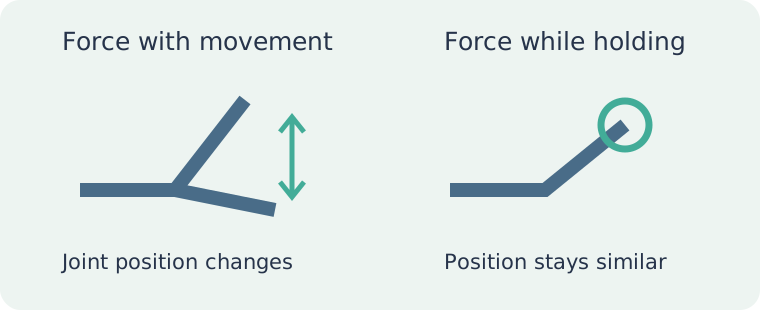
Force without much movement
When you hold a position against resistance, muscles can produce force even though the joint position changes very little. That is the central idea of an isometric action. The absence of visible movement does not mean that the effort is small.
The conditions matter
Two holds lasting 20 seconds may involve very different resistance and positions. Record the movement, position and resistance as well as time in a separate note. A duration by itself cannot explain how demanding the exercise was.
It is not a separate category of magic exercise
A weight can be moved or held. These are ways of performing an action, rather than competing systems that everyone must combine. Being over 40 does not by itself establish a need to add a particular holding routine.
Keep claims about pain modest
Isometrics have been studied in tendon rehabilitation, but the review linked below does not support a universal superiority claim. Replacing a painful movement with a hold does not replace an assessment. This article does not prescribe hold durations or loads.
Record it honestly
Do not enter seconds into the repetition field and then compare them with ordinary repetitions. JJ FIT records sets, weight and reps; separate notes can preserve the context of a hold. Avoid deliberately holding your breath. Seek individual advice for relevant medical conditions or symptoms during exercise.
Sources and further reading
- Clifford et al. (2020): isometric exercise and tendinopathy
- National Institute on Aging: exercise and strength